I am building a browser for agents
by Gaurav Koley
For most of its existence, the browser has made a simple assumption: there is a person sitting in front of it.
The person knows why a tab is open. They can tell whether a button looks suspicious, decide when to share information, and notice when the page did not do what it was supposed to. The browser provides the page, the controls, and some security boundaries. The person supplies the intent.
Now people are asking language models to use the same browser on their behalf.
The common solution is to make the model imitate the person. Give it a screenshot, ask it to find the right button, move a cursor, click, and look again. This is useful when there is no other interface. But the agent is not a bot that arrived with an agenda of its own. It is an extension of the person: acting on their intent, with authority they delegated and may take back. Making it dress up as a person with a mouse hides that relationship from the browser.
So what should a browser be when people can extend their intent through agents?
That question has been stuck in my head for the past few days. And so I started building Narada.
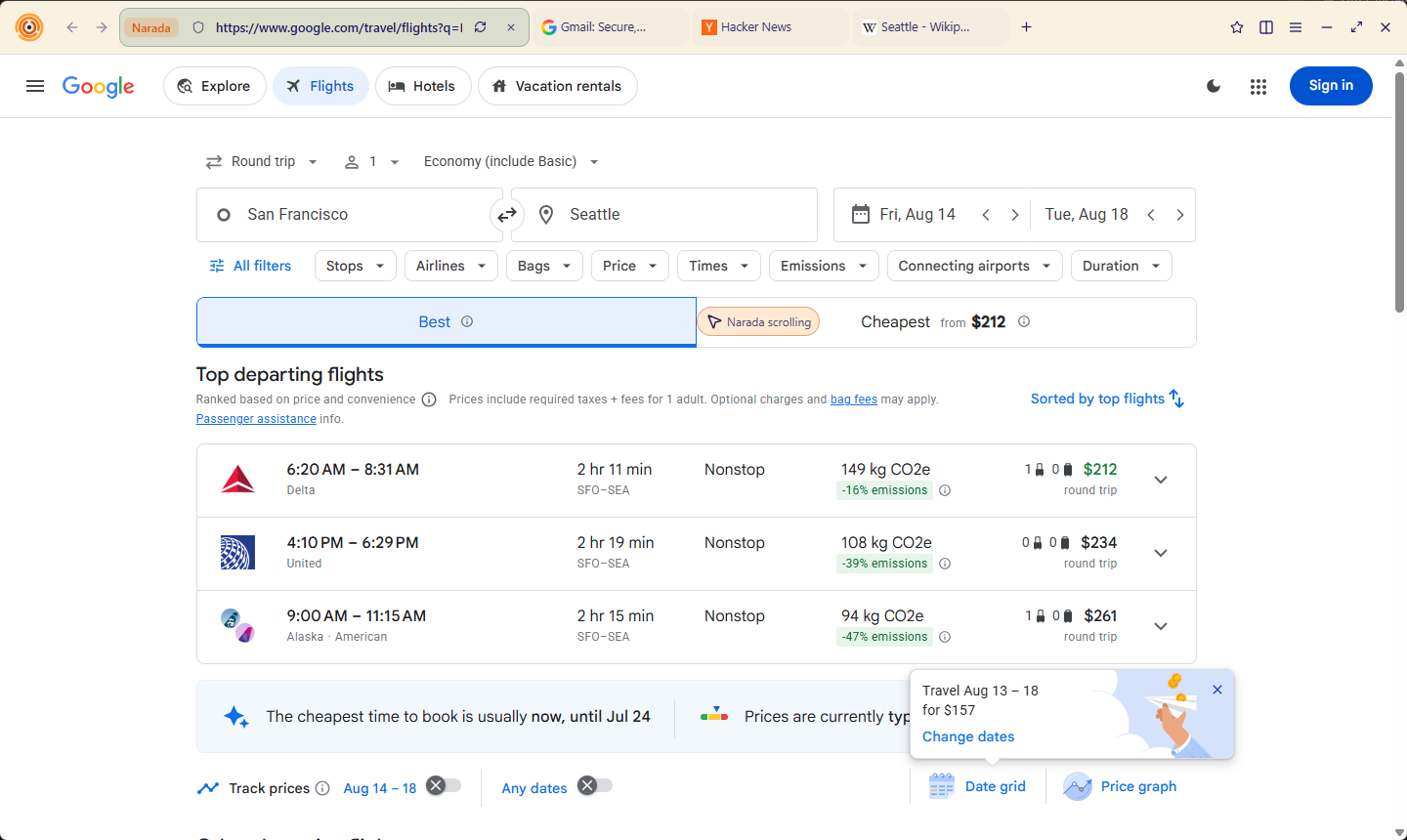
So what is Narada?
Narada is an AI-first desktop browser for people and their agents. It still has tabs, an address bar, and pages. The difference is that the browser can represent delegated action directly: whose agent is acting, where it may act, and what authority the person gave it.
Why is a chat panel not enough?
The obvious product shape is “a normal browser with a chat panel.” The chat panel is useful, but conversation is only one part of an agent task. Once the agent starts acting, someone still has to decide:
- Which tabs may it use?
- Which tools may it call?
- Which actions need approval?
- What is it doing right now?
- When has the person taken control back?
Those decisions should not move into a different prompt every time the model changes. They belong to the browser.
Narada therefore owns the tools, tab grants, permission checks, and activity around the agent. The model can reason about the task, but the browser decides what interface is available and what limits apply.
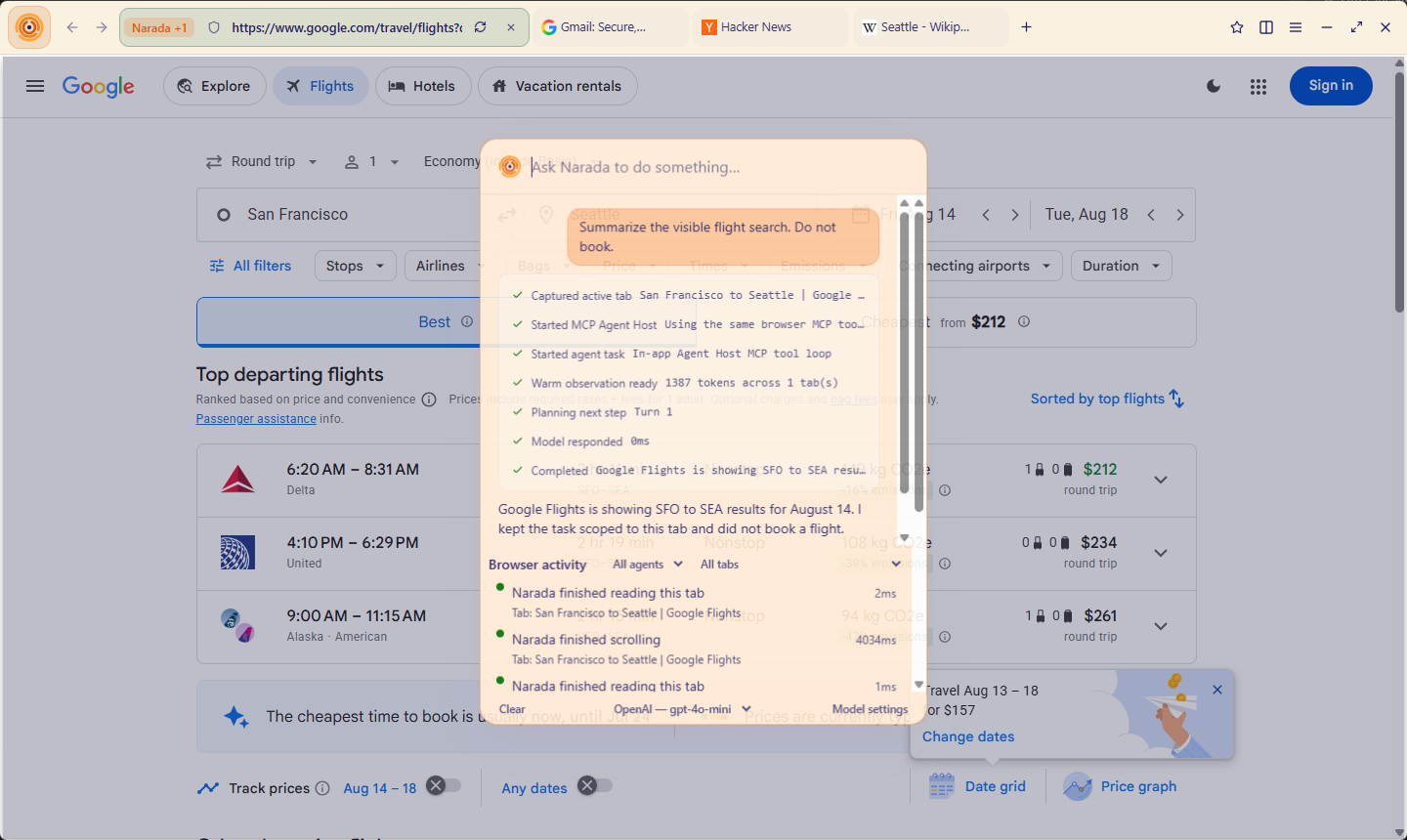
The two screenshots show delegated work while it is happening and after it has finished. Narada recorded the tab observation, the Agent Host loop, the model turn, the result, and the tab-scoped activity. The page, the delegation, and the execution history remain visible in one place.
The interesting part is not the answer. It is that the execution has a browser-owned place to happen and a history the person can inspect.
Who remains in control?
This is the distinction I am trying to make: a browser with AI adds a model to a product built for people. Narada is a browser for people with agents: software that can carry their intent further without becoming an invisible bot or an independent principal.
The person remains the principal. The difficult part is giving their agent a real interface without making them surrender the browser, the active tab, or the machine. Delegation that reduces the person’s agency is not much of an improvement.
Narada is still unfinished. But I think browsers will have to understand delegation, not merely automation. I will keep writing about what I learn as I build it.